
Feeding Your Baby to Sleep Is Biologically Normal — Not a Parenting Failure
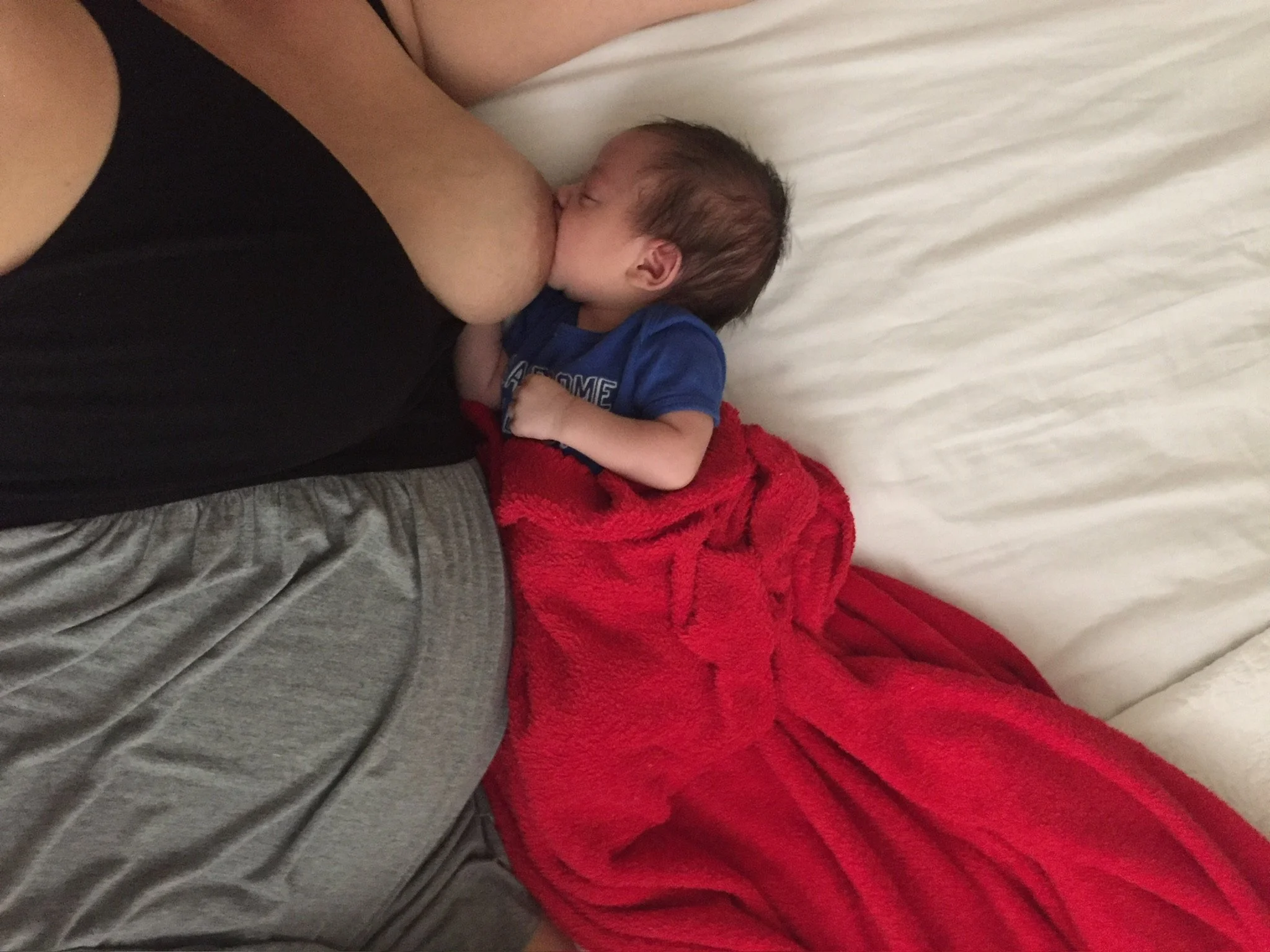
“Don’t feed your baby to sleep.”
Few pieces of parenting advice get repeated more confidently, or with less biological basis. Parents are warned they are creating bad habits, building sleep crutches, preventing their baby from learning to self-settle. The messaging is everywhere. And it is almost always delivered with urgency, as if the window to ruin your child’s sleep forever is closing fast.
I have been a labor and delivery nurse for 18 years and a board-certified lactation consultant for almost 14. I have sat with thousands of families in the hardest and most vulnerable moments of early parenthood.
And I can tell you with complete confidence: feeding to sleep is not a design flaw in your parenting. It is a design feature of your biology.
Human babies are wired to fall asleep while feeding. And human parents, breastfeeding parents especially, are biologically wired to help them do exactly that. The fact that this became a cultural fear says a lot more about modern parenting advice than it does about you or your baby.
So let’s talk about what is actually happening in your body and your baby’s body when they drift off at the breast. Because once you understand the biology, the fear starts to look a little ridiculous.
What Is Actually Happening When Your Baby Falls Asleep Nursing
Breastfeeding is not just a calorie delivery system. It is a full neurological and hormonal event for both of you. Here is what is actually happening:
• Cholecystokinin: a hormone released in your baby’s gut during feeding, signals fullness and directly triggers drowsiness. This is not a habit. This is your baby’s own body chemistry pulling them toward sleep.
• Rhythmic sucking activates your baby’s parasympathetic nervous system, the branch responsible for rest, digestion, and calm. The warmth of your body, the sound of your heartbeat, the skin contact, the familiar smell, all of it works together to bring their stress response down and their sense of safety up. Sleep is the natural result.
• On your side of the feed, oxytocin rises significantly during nursing. Oxytocin reduces cortisol, lowers blood pressure, and promotes deep relaxation and connection. Prolactin: the hormone that drives milk production, has a similarly sedating effect. Nature made breastfeeding feel drowsy on purpose. Mother and baby are meant to rest together.
I remember nursing my babies in the middle of the night and feeling that wave of oxytocin hit, that warm, heavy, almost impossible to resist pull toward sleep. At the time I thought I was just exhausted. And I was. But I was also experiencing exactly what my body was designed to do. We were regulating each other.
This is not a bad habit. This is mammalian biology doing exactly what it was designed to do.
Where Did the Fear Come From
The cultural anxiety around feeding to sleep did not come from developmental science. It came from a set of ideas, popular in the twentieth century and especially in Western parenting culture, that prioritized infant independence, scheduled feeding, and early sleep consolidation over responsiveness and biological norms.
Sleep training as a concept gained enormous cultural traction starting in the 1980s and 1990s. Parents were increasingly told that responding to a baby at night would create dependency, that babies needed to learn to self-soothe from very early on, and that feeding to sleep was a habit that would haunt them for years. Books like Babywise put scheduled feeding and sleep training on a pedestal and presented them as the path to a well-ordered family life. Those ideas spread fast, and in some communities they spread even faster because they got wrapped in religious language.
I want to be careful and respectful here, because I know this touches something personal for a lot of families. But I also think it needs to be said: some faith communities, particularly in the 1990s and early 2000s — began teaching rigid infant scheduling as a form of biblical obedience. The idea was that a baby who learned to submit to a schedule was learning godly character. Responsiveness to a crying baby was sometimes framed as permissiveness. Feeding on demand was framed as giving in.
And here is what is so painful about that framing: it was never historically accurate, even from a biblical standpoint. Jewish families during biblical times, the very culture the scriptures were written in, practiced what we would today recognize as responsive, attachment-oriented parenting. Mothers nursed their children for two to three years. Babies were carried. Needs were met. The idea that leaving an infant to cry alone in a crib builds godly character would have been utterly foreign to the families of the ancient Near East.
Some of us grew up in communities where we absorbed these teachings without ever being given the chance to examine them. And now we are new parents trying to figure out if letting our baby fall asleep at the breast means we lack discipline, or faith, or follow-through. I want to gently and firmly say: it does not mean any of those things. It means your baby is human and you are responding to them. That is not a failure of character. That is love in action.
And today the noise is so much louder. It is not just a book circulating through a church small group anymore. It is every platform, every algorithm, every comment section. A new mom cannot open her phone without being served a reel about wake windows, a post about sleep training at eight weeks, or a highlight reel of a baby sleeping twelve hours independently, as if that is the standard every family should be measuring themselves against. The pressure is constant and it is curated to look like consensus when it is not.
And while we are being honest, let us talk about Moms on Call, and 12 Hours Sleep by 12 Weeks, and the Taking Cara Babies accounts of the world. There is a certain amount of practical wisdom in some of what these resources teach about sleep environment and routine. But I want to ask a genuine question: what are YOUR sleep crutches?
• Do you sleep with a fan on?
• A specific pillow you cannot live without?
• Blackout curtains?
• White noise?
• A certain side of the bed?
Most adults have an entire ecosystem of conditions that help them sleep well, and we do not consider any of that a character flaw or a bad habit we need to break. We just call it knowing what we need. And yet somehow we expect our brand new, neurologically immature, fourth-trimester babies to need nothing and want nothing and drift off independently into a silent dark room, and we call THAT healthy sleep. The standard we hold our infants to is one we would never hold ourselves to for a single night.
What gets drowned out in all of that noise is something every parent already has access to if they can find a quiet enough moment to hear it, their own instincts. Their own biology. Their own innate knowing that their baby needs them, that responding is not ruining, and that the discomfort of a crying baby is supposed to move you. That is not weakness. That is your nervous system working exactly as designed.
I lived through that era as a young mom. I heard all of it. And even with my clinical background I felt the pressure. The difference between then and now is that we have so much more research, and so many more voices willing to push back on advice that was never rooted in infant biology, or honestly in good theology, to begin with.
Feeding to Sleep Does Not Ruin Sleep
I want to say this as clearly as I can, both as a clinician and as a mom: feeding to sleep is a developmental phase. It has a beginning, a middle, and an end, but that end comes gradually, naturally, and on your baby’s timeline. Not because you sleep trained them. Not because you finally held firm. Because they grew, and their needs changed, and they did not need that particular form of comfort anymore.
I nursed three babies to sleep. I supported them through toddlerhood and into childhood as they needed me, in whatever way they needed me. And somewhere along the way, not all at once, not dramatically, just quietly and gradually, they did not need me to do that anymore. That is how developmental milestones work. Just like learning to crawl, and then walk, and then run, nobody announces it is happening. It just does.
They are adults now. And I want to tell you something I did not fully appreciate when I was in the thick of those nights: I miss it. I miss the weight of a sleeping baby on my chest. I miss the quiet of a dark room and a nursing baby and nothing else needing my attention for that one moment. It felt endless when I was living it. It was not endless. It was a season. And it was a gift.
And now I am watching it all over again with my grandchildren. Same responsiveness. Same feeding to sleep. Same middle of the night closeness. And what I am seeing is exactly what I saw in my own children. When I look at what full responsiveness actually produces, here is what I see:
• Babies who trust that their needs will be met
• Toddlers who are secure enough to explore independently
• Children who separate with confidence because their attachment is solid
• Kids who eventually, on their own timeline, simply do not need to be fed or held to sleep anymore
Being fully responsive does not create dependency. It fosters independence. A baby who learns that the world is safe and that the people who love them will show up does not cling harder. They eventually let go more easily. I have watched this pattern unfold across two generations of my own family and I am more convinced of it than ever.
So when someone tells you that you are ruining your baby by feeding them to sleep, I want you to hear this from someone who has been a nurse for 18 years, a lactation consultant for almost 14, a mother of three, and a grandmother of two: you are not ruining anything. You are living inside a season that will change before you are ready for it to.
But What If It Stops Working
This is where the nuance lives, and where good support matters.
Sometimes feeding to sleep works beautifully for a long time. Sometimes it becomes exhausting. Sometimes babies go through periods of waking more frequently and parents find themselves feeding every hour overnight and running completely empty. Those experiences are real and valid and they deserve real support, not judgment in either direction.
It may be time to reach out for support if:
• Feeding to sleep has become the only way your baby will settle under any circumstances and the frequency is unsustainable
• You are feeding every hour overnight for weeks on end and your mental and physical health are suffering
• Your baby seems uncomfortable, unsettled, or in pain regardless of how long or how often they feed
• You simply want more tools and more options, not because anything is wrong, but because you are ready
The goal is never to rigidly defend one approach forever. The goal is to help parents understand what is biologically normal, what is flexible, and what their actual options are, so they can make decisions from a place of confidence instead of fear.
You did not ruin your baby by nursing them to sleep. You regulated their nervous system, flooded both of your bodies with bonding hormones, and gave them exactly what they needed in that moment. That is not failure. That is caregiving.
When You Want More Tools
If you are in a season where feeding to sleep is no longer sustainable, or you simply want to understand infant sleep more deeply before your baby arrives, we have a class for that.
At Bump to Baby AZ we teach holistic, responsive sleep classes designed for parents who want real information about infant sleep biology, without the fear-based messaging. Head to bumptobabyaz.com to see when our next class is available.
And if you are in the thick of the newborn feeding days and need someone in your corner, my team at Az Breastfed Babies is here. We serve families across the entire Phoenix Valley, in your home and in our offices, and via telehealth anywhere in the United States. Most visits are covered by insurance.
Click here to check your coverage and book with my team: https://www.azbreastfedbabies.com/appointments
I’m Amey Fields, RN IBCLC, an 18-year labor and delivery nurse and board-certified lactation consultant. I own Az Breastfed Babies, a team of 18 IBCLCs supporting families across the Phoenix Valley and nationwide via telehealth. I am an IBCLC but not YOUR IBCLC (yet 🧡). Information shared here is not individualized advice. Personalized guidance is provided through one-on-one consults only.