
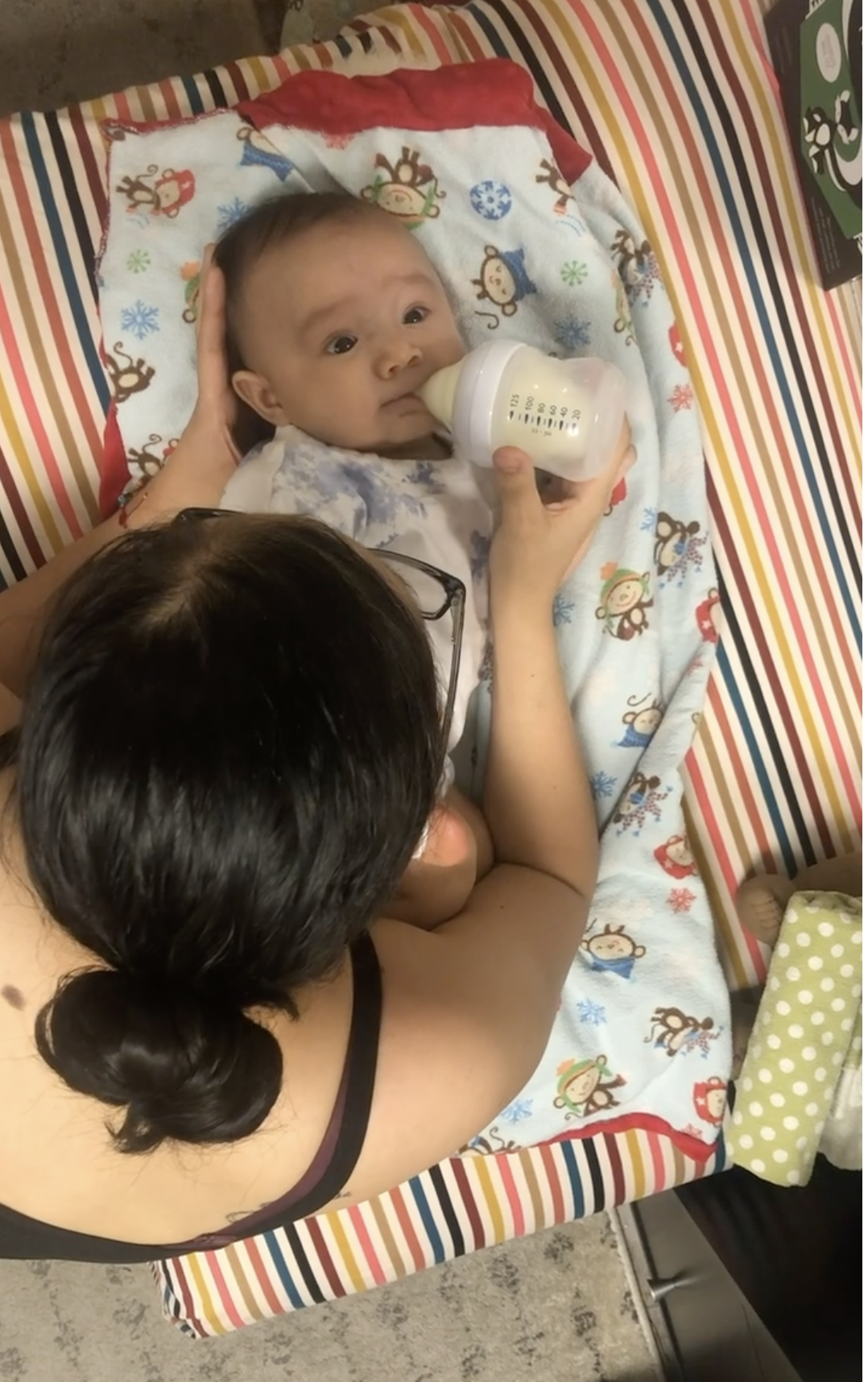
You have tried everything.
A different bottle. A different nipple. Having dad offer it. Sending yourself out of the house. Waiting until baby is hungry enough that surely — surely — they will just take it.
And still nothing.
If this is you right now, I want you to hear something important before you buy one more bottle or try one more trick from the internet.
Bottle refusal is not a behavioral problem. Your baby is not being stubborn. They are not manipulating you. They are not making a statement. Babies under six months do not have the developmental capacity for any of that.
Bottle refusal is an oral function issue. And that changes everything about how we approach it.
The Advice That Is Not Helping — And Might Be Making It Worse
Most of the advice floating around about bottle refusal is outdated at best and counterproductive at worst. Here are three things my team no longer recommends — and why.
Waiting until baby is hungry enough. The idea here is that a hungry baby will eventually give in and take the bottle. What actually happens is that a hungry, frustrated baby becomes a distressed baby — and a distressed baby is even less able to coordinate the oral function required to feed from a bottle. You are not teaching them to take the bottle. You are just adding stress to an already hard situation.
Sending mom out of the house. This one is everywhere. The thinking is that if baby cannot smell mom they will accept the bottle. But mom's presence is not why the baby is refusing. The baby is refusing because something about the mechanics of bottle feeding is not working for them yet. Removing mom does not fix that — it just means mom misses the feeding and everyone is more stressed.
Trying a different bottle. Buying a new bottle is almost never the answer. The bottle is not the problem. Oral function is the problem. A baby who cannot coordinate their suck, seal, and swallow pattern for bottle feeding will struggle with most bottles regardless of what the label says about flow rate or nipple shape. Slow flow on the label means nothing — flow rate is not standardized across brands and has never been regulated.
What Is Actually Happening
Here is the thing about breastfed babies who refuse the bottle — especially the ones who took a bottle just fine in the first week or two and then suddenly stopped around eight to twelve weeks.
Breastfeeding and bottle feeding use the same muscles but they use them differently. At the breast, a baby with a generous milk supply does not always have to work very hard. Milk flows readily and some babies get by without having to develop a strong, well-coordinated suck. They are growing well. They seem to be feeding well. And then you offer a bottle and it falls apart.
It is not that they forgot how to take a bottle. It is that bottle feeding requires a specific set of oral skills that were never fully established — and now that baby is older and stronger and more opinionated about what goes in their mouth, it becomes very obvious very quickly.
What My Team Does Differently
Several members of my team have completed specialized training in bottle refusal through Rachel O'Brien IBCLC — one of the leading voices in this space and the creator of the Guiding Bottle Breakthroughs method. This is not general lactation training. This is specific, evidence-based training in exactly this problem.
When you come to us for a bottle refusal consult, we start with a full oral function assessment. We look at how your baby moves their jaw, their tongue, and their lips. We look at their suck pattern, their seal, their coordination. We look at what is working and what is not — and we build a plan from there that is specific to your baby.
Not a new bottle recommendation. Not a tip to try when baby is sleepy. A real assessment with a real plan.
And here is what that approach consistently produces. Babies who take the bottle. Not because we forced it. Because we figured out what they actually needed to learn — and then taught them, step by step.
A Note on Oral Function and Breastfeeding
Sometimes families come to us and say — but my baby breastfeeds great. They are gaining weight. Why can't they take a bottle?
This is actually really common and it makes complete sense when you understand oral function.
A baby with a plentiful milk supply at the breast does not always have to work hard to feed. Milk comes readily. Baby grows well. Everything looks fine. But the underlying oral function was never fully challenged at the breast — and the bottle, which requires a different and more active coordination, exposes the gap.
It is not a breastfeeding failure. It is not a formula problem. It is a skill that needs to be built — and that is exactly what my team helps families do.
You Do Not Have to Figure This Out Alone
Bottle refusal is stressful in a way that is hard to describe if you have not lived it. The clock is ticking on your return to work. Your baby needs to be able to eat when you are not there. And nothing is working.
My team is here. We have IBCLCs who specialize in exactly this. And there is a way through it — for almost every family.
If your baby is refusing the bottle and you are running out of ideas — my team of IBCLCs is ready for you. We serve families across the entire Phoenix Valley in person and via telehealth anywhere in the United States. Most visits are covered by insurance.
👉 Click here to connect with my team today. 🧡
I am an IBCLC — but not YOUR IBCLC (yet 🧡). Any information shared here is not individualized advice. Personalized guidance is only provided through one on one consults. We would love to work with you!